RA
RA Japan
Global
Local
Music
Interact
Search RA
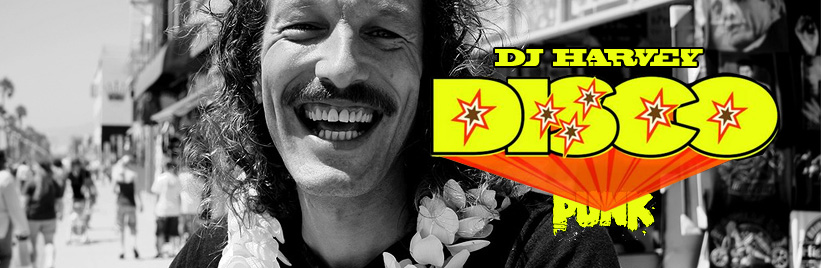
DJ Harvey: Disco punk

Punk and disco are far closer than you think, says the legendary editor and beloved DJ. RA's Andy Beta calls up California to talk to the one and only Harvey Bassett.

How to encapsulate the career arch of Harvey Bassett for the uninitiated? A punk rock drummer by age 14, his singles spun on John Peel's show in 1978, he became enamored with hip-hop's worship of the drum breaks on a trip to New York in the early '80s and abandoned the drum kit in favor of the turntables. Crucial to bringing American disco/ house/ garage music to incubate and cross-pollinate back in Britain, he and his crew began to throw parties as TONKA Hi-Fi throughout the UK festival circuit. His Moist parties even hosted Larry Levan shortly before the famed jock's death.

Harvey
In many ways, Harvey carries the torch of the Paradise Garage: open-eared, lovingly-curated, highly-influential, a "DJ's DJ" one might say, but always party-centered. One can trace his trajectory from London's Ministry of Sound through his touch on folks and labels like Ian Brown, Mo' Wax, Junior Boys' Own, Skint, Jamiroquai, on through his continuing influence on folks like Idjut Boys, Rub N Tug, the entirety of Norway's space-disco scene and a reverence for whatever the man puts on the turntable in far-flung locales like Japan and Singapore.

With his friend Gerry Rooney, the two took the art of the disco edit (as practiced by Ron Hardy, François Kevorkian and most early '80s NYC DJs) and revitalized it for the new century with their now-hallowed set of Black Cock edits. For as laid-back and laconic as Harvey can be in-person, when he was last in New York, his studio and DJ schedule made it impossible to chat. So in anticipation of his appearance back out on the East Coast at Sunday Best's summer closing party on the Gowanus Canal in Brooklyn (capping a season that featured the likes of Theo Parrish, Omar-S and Justus Köhncke), we caught up with Harvey over the phone as he was "cruising the back streets of Venice Beach, hanging out, enjoying the day."

What's a day in the life of DJ Harvey?

Most of the time I don't see the day. Usually it's a night in the life. Right now I've been sober ten days—I mean, no alcohol. I'm not sure I like it actually. It's made out to be better than it actually is.

What's that Frank Sinatra quote: "I feel sorry for the people that don't drink. When they wake up in the morning, that's the best they're going to feel all day"?

He was right! Alcohol gives you Dutch courage. It's best not to be too de-sensitized when you DJ though. A day in the life of Harvey...I generally go surfing, get something to eat. What do I do any given day? As little as possible, really. Just cruise and hang.

What do you accomplish at night that the day doesn't provide?

I'm a great under-achiever really. Making it through the day...I don't do jack shit, man. [laughs loudly] I'm not searching for records or making re-edits, or doing anything like that. Not painting pictures, writing scripts, things that might be in the constructive realm.

What do you listen to first thing when you're up?

Soft Machine or something like that. I never listen to dance or club music unless I'm auditioning the record or playing it in the club. I don't listen to music in general. I like to just encounter stuff as I'm moving around, walking to the store or getting in someone's car and there's music playing. Lots of Californian classic rock radio really, even if they just play the same 50 records over and over again.


"Being in a band was like
having four girlfriends."


Did you listen to the radio a lot growing up?

We used to listen to the pirate radio stations growing up: Radio Caroline, Radio London, Radio Luxembourg. I grew up in Cambridge and spent most of the '70s in and around there. It was a good time and place to grow up. Very liberal atmosphere, liberal parents, clever young people running around. It was a good foundation for life, I suppose.

Would you consider it a middle class upbringing?

At that point, it would have been lower middle class. These days we'd be working class. What was the working class is now the underclass. There's no work for them. These days, the traditional class system has broken down to money and no money. Most of the kids with trust funds want to be street kids anyway, deny they have any money and go get dreadlocks.

What were you into as a kid?

I listened to what was on the radio in the '60s and my mum's record collection. She had a great collection of original rock & roll and jazz. I'd listen to all the early Sun Records, Johnny Cash, Buddy Holly, Elvis Presley, Jerry Lee Lewis, big rock & roll names. I then got into whatever my babysitter's boyfriend was listening to: Deep Purple, Bachman Turner Overdrive, heavy rock. And then in the '70s, it was punk and new wave. I was very young at the time but I could feel where the angst-ridden aspect of the industry was about to embrace the punk movement. I cut my hair short, wore straight-lace pants, and joined local punk bands as a drummer. I gigged around and ended up making a couple of singles with The Ersatz. John Peel liked us. To be 14 years-old and have John Peel playing your records was pretty cool.

It must have seemed like the top of the world to a teenager.

It kinda was until I went to my buddy's house and saw it was floor to ceiling with the records of ours that we couldn't sell. I remember that being in a band was like having four girlfriends.

Right, except none of them put out! So what were the differences between punk and disco in, say, 1977?

The same? [laughs] Coming from a hardcore perspective...in the UK, they were more closely aligned. But US punk, it didn't deal with disco. I love to give US punk a hard time. They love to hate British punk as well, especially in California. As punks, we would love disco, because you weren't supposed to. As a real punk, you were always contrary. I don't want to dump on [laughs] those cats, cuz they feel very passionate about their scene, but punk, you gotta be contrary. If you've fallen into a part-time punk, then that's not punk. Punk's a state of mind, like disco. They're actually very closely linked, just as an expression of freedom, through the dance and dressing up.


Harvey


It's funny to think of the Sex Pistols being in the same year as Saturday Night Fever.

I just remember in SNF, the first thing John Travolta says is something like "Fuck you, you cunt!" (Ed. His quote is: "Fuck the Future"), and it was like "WOOOOOOW!" He was a young punk in his own world. It's hard to pin it down, but they are together. If you watch The Great Rock'n'Roll Swindle, you got the Sex Pistols and Tavares jamming in the club together. It's very close. It's just the contrariness of punk and the joy of disco go hand-in-hand really. Especially with the new, electroclash and stuff like that, [it] brought kids who never considered themselves or listened to house music, now digging the cosmic sound. It's re-connected.

So do you think there's a disco revival going on now?

It never went away, mate. It never went away, it never stopped. People become a little more aware, but it never went anywhere. It's much bigger and better than it ever was. Just after the so-called "death of disco," when they were blowing up records at baseball stadiums and shit, the Paradise Garage opened. Just when it was supposed to go back in the water, it "peaked."

You came upon DJing through early hip-hop and the like, right?

The record that did it to me was "Electric Boogie Breakdance" by West Street Mob. But I couldn't understand why the record sounded like a dish soap commercial! It sounded strange, I couldn't work it out. It took a while to work out that it was a DJ playing two records to make one record with the breaks and all that. I heard it in the clubs in London. When that one came out, I can pretty much safely say there was not a record that sounded like that, not being produced like that. Sugarhill Gang was session bands re-playing Chic or whatever. This was a DJ cutting up Incredible Bongo Band with chants over the top. I hadn't heard shit like that. When I worked out it was one guy I went: "Okay, now I don't have to have four girlfriends!" I can actually express myself rhythmically through cutting breaks and make a party and be part of this... thing.

And you came to New York in the early '80s?

It was 1985, around Christmastime and my buddy bought me a ticket over. We hung out in Washington Square Park with the Rocksteady Crew and bought them pizza and I...kinda ended up living with those guys for a minute. And it was all the stuff that came with that: bombing the trains, walking up into the Bronx, going to the Devils' Nest and the Latin Quarter and Reggae Lounge.

Was Wild Style out by then? Did that inform your trip?

It was out by that time. I wasn't sure if I had seen it. I remember the music that was very sought after, those Wild Style breaks. At that time, there was still a heavy punk-rock/ hip-hop crossover. Of course, the Clash brought Futura to London by that point. Blondie with Flash, uptown and downtown thing, go to an art opening in Chelsea and all the Fat Boys are there.

It always seems amazing, in retrospect, to see how these two disparate worlds mixed so readily.

At that point, the punks and the b-boys were both outcasts, so they could relate. Something that we used to do as punks in London was go to the reggae clubs. You'd get these spiky, spotty white kids hanging out in the backrooms with the Jamaican cats, smoking weed. There'd be this mutual...tolerance. Here are these two different groups that are on the edge of what's going on and they can mix without any worries. I supposed that was the same with hip-hop punk scene in New York.

"I love this fucking place.
If God exists, she
would bless America."


Harvey
When you come back to New York now, does it still feel that way for you?

I sometimes worry that everything is so shit, there must be something AMAZING going on. Somewhere, someplace the next scene is at its peak right now. And none of us know. But the only thing in the last ten years to be produced in New York is the hipster. Which is a terrible place to be. Imagine having to be a hipster, those poor fuckers. There are some creative young people, but I don't see one of them being original or cutting edge. I want something modern to happen, fucking hell.

The thing about hipsters, you ask person to person, and no one would admit to it. It's this "other," it's not you and your friends with the Kanye West sunglasses and sideways cap, it's the fellow on the other subway platform...

...with the Kanye West sunglasses and cap!

There's this self-loathing inherent in it.

I suppose I'd be a hipster, but I'm too old.

Has your perception changed as you grow older?

I don't think I've changed that much at all. I'm pretty much running around as I've always been. I don't feel much wiser. Just my internal organs are in worse condition so it takes me longer to recover. It would be quite frustrating to be young these days. It seems like it's all been done before. Maybe it was done for my generation too? But I think it's difficult to make a strong original, forward-thinking statement as a young person today. If it were me, I would probably not have a computer or a phone, live in the Midwest or something, outside of the modern media madness. Just develop stuff yourself.

It seems you keep the internet, Facebook, and those trappings at arm's length.

I've never sent an email actually! People have sent them to me, people have set up Facebook pages for me, but I've never written one. If you do that, that's what you do. You spend your day doing that shit. Why not just get on with what you're doing? Like sleeping. [chuckles]

Black Cock Records
I get this impression of you being a Luddite.

When I tell people that I'm a "Luddite," they just look at me. That's another thing about America, there are no history lessons. But I love this place, that's why I live here. Even with no health care or infrastructure, racial tension, a two-thousand mile cultural void, I love this fucking place. If God exists, she would bless America.

You and Gerry re-released all the Black Cock stuff this year after being out-of-print for over a decade and fetched ridiculous prices on the web. What was the impetus for that?

Basically, quality control. There was obviously a demand. It had been heavily bootlegged by two "teams," but the quality was bad, the labels were wrong, it was pure exploitation by some ugly, money-grabbing fools. We just wanted to put a stop to that. Not to make money, but to make it so that people buying the Black Cock records were actually getting the Black Cock.

As edits have become so en vogue now, has your perspective on them changed at all? When you originally spliced these edits together, it had almost become a lost art form.

It's a double-edged sword. Editing a record is not an easy way to make a record. We started off cutting tape, how Danny used to do it. I got my hands on a very early hard drive, like 4 MB, you could get four to six minutes of music, get the little soundwave and cut the stuff on the Atari computer.

People go, "I'm not a musician, I'm just a DJ, I have a computer program. I'll just cut up this record and put my name on it. Blahblahblah." Half the edits are fucking junk. They've ruined the record. Arrangement, structure, the original edit is hugely important to how the record moves. Just because you have the technology doesn't mean you're any better at doing it. On the other hand, I love the disco edits. There's some absolutely fantastic stuff. I play a lot of them. A good record is a good record.

It's down to the party at the end of the day. It's down to your own imagination, if you put records together in a good way. But with computers, you have no limitations: flange it, freak it, play two hundred records in a half-hour. It doesn't help. If it's not in you, it's not going to come out of you.

Words / Andy Beta
Published / Thursday, 03 September 2009

comment 22 Comments

Photo credits /
Header - Paul Zollo
Harvey DJing - The Bamboozla


Share this article


Features


Other features
The Belgian producer has some of the dirtiest basslines in the world of techno. RA's Richard Brophy called up Brussels to find out more about the rising DJ/producer.
RA picks the October festival highlights from across the globe.
In a city renowned for its cutting-edge imprints, liebe*detail flies under the radar, consistently releasing some of the finest tech house around. RA's Todd L. Burns finds out more.


About  
Staff  
Mobile (beta)  
Submit event  
Copyright © 2013 Resident Advisor Ltd.
All rights reserved. Terms & Privacy.