|
 |
 |
 |
 |
 |
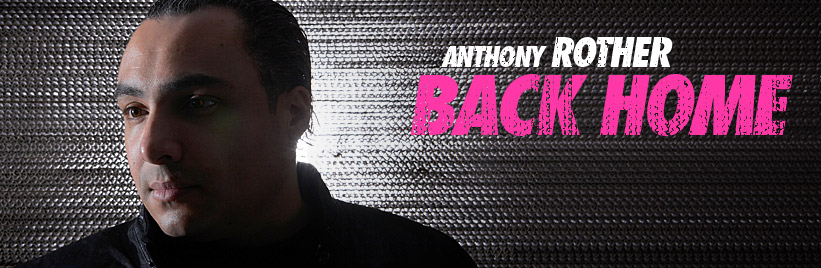
Anthony Rother: Back home
The electro producer is back with yet another edition of Popkiller and once again inspired by the genre that changed the course of his career. RA's Todd L. Burns calls up Offenbach to find out why.
Ups. Downs. In betweens. Anthony Rother has seen it all. When you've been around for as long as he has, you simply get used to it. With the release of Popkiller 2, however, you'd get the sense that he's on the down slope. Treading water. Trying to reclaim past glory. Repeating himself. I mean, a sequel? Really?
Nothing could be further from the truth. Popkiller 2 purposefully sounds a lot like the original Popkiller. But it also means that Rother has plenty more to say within a genre that he, lest we forget, basically invented. People take Datapunk for granted now, almost a decade after Rother famously broke with everything that he had done before. At the time, it was anything but a safe bet. "When 9/11 happened, the whole music world changed. The market changed, the vinyl system changed. And, for me, it was the last time that I did electro in the same way," says Rother.
Rother's formula hadn't been an unprofitable one. He had created at least two bona fide electro classics in "Sex with the Machines" and "Simulationszeitalter," and had been instrumental in the revival of purist electro at a time when electroclash was taking hold elsewhere. Rother had been interested in the stuff from an early age, joining a local group called the T.F.D. Crew at the ripe young age of 13.
"In the town that I lived in we had a club that had been around since the '60s. James Brown was there, Percy Sledge. When I was young and I went there, they played black music: electro, Miami bass. It all started with the DJ there. I had a drum computer on my Commodore 64, and I went to him to ask him to give me some beats... It was a small town, so I didn't know about house music when it first started. It was all about hip-hop and electro. It was only in '92 or '93 that I was introduced to the underground techno scene by Heiko Laux."
Laux, who helped start Frankfurt's Kanzleramt imprint at about the same time, brought out Rother's first album release under his own name, the aforementioned Sex with the Machines. Inspired by his friend, Rother created his own imprint, Psi49net, soon after. For a few years it seemed that everything was going well. Rother was making tweaks to the electro template that he loved so much, and satisfying fans around the world. Having his own imprint allowed him to do anything he wanted. The honeymoon, however, didn't last long.
"My label, Psi49net, was managed by some guys that made some mistakes. The label was close to going out of business. We argued a lot, and they eventually came with a lawyer who wanted 150,000 euro from me. They held all the licenses from my tracks, so I wasn't earning any money from my music. I was broke. I had nothing. I found a lawyer of my own, and he told me to go into the studio and create new music. So I went into the studio and created 'Back Home,' which was the Datapunk sound."
It's sometimes hard for an outsider to understand how important tiny incremental changes can be within electronic music. Ask Rother to detail the difference between Datapunk and the traditional electro he had been producing in the years previous and it sounds innocuous. "I straightened the beat and got rid of the vocoder in favor of my own voice," he says, recounting the story for what must be the 137,567th time.
In a similar manner to the way that Instra:mental and D-Bridge have recently unlocked new possibilities within the insular sound of drum & bass by changing the tempo, Rother was reinvigorated by what he found: "I had a totally new universe that was open to anything. Electro has always been associated with machines and the future. Datapunk is more open to the human side. An indie-punk attitude, but made with machines. I was afraid my fans wouldn't follow me to this new sound. But inside I knew I had to do it. Some fans followed, some didn't. I also got many new fans as well."
Those new fans were turned on by the undeniable power of Rother's new work, a driving sound that was vulnerable at the same time. The melodies were simpler and more direct, but that was exactly the point. Rother was no longer interested in having sex with machines; Popkiller saw him writing love songs and odes to the impact his father had on his life. Rother's own impact on other artists through his move to a more immediate sound was just as important. The Hacker and Boys Noize released on Datapunk in its early years, illustrating the link that the label forged between the fall of electroclash and the rise of Justice. And Gregor Tresher, before A Thousand Nights' breakthrough success, released his first album on Datapunk as well.
Popkiller 2, though, signals a slimming down of Datapunk to just Rother. The producer spent a month of 2008 in India, reassessing his business and his life. "Nobody could reach me. I had a book, and I wrote in it every single thing that came to my mind. All of the situations with the business, my life…. I realized I was a label manager instead of an artist…. When I got back, it took a year to rebuild things on an artist level," he says. "Now, Datapunk is my outlet."
That of course doesn't mean that Rother will stop making music for other outlets. He's had a long history of releasing music on other imprints. "I came to a point where I wanted to leave the Datapunk sound. This is when I recorded My Name Is Beuys Von Telekraft in 2007." Recently Rother got behind the desk for a few tracks on DJ Hell's Teufelswerk, he claims he's had an album in the can for his experimental sublabel Stahl Industries for nearly a decade ("I'm just waiting to find a visual artist that can make something that I'm happy with to accompany it") and he constantly refers to being in the studio looking for "his next mission" as we chat on the phone. For now, though, he's happy to explore the boundaries of Datapunk, once again finding inspiration in the sound that he created.
He is excited about where things will go from here. "I had to change. When you're in the techno scene, you don't live a very healthy life. We're all humans. I was really at the point where I destroyed myself. I was just lucky that I found it out when I went to India." He pauses before he goes on to clarify, "You can be two things. You can be an artist or you can be in the scene. Now, I'm more focused on the artist side. The scene is fun. But I don't want to have it as my life. Now I know what's really important, and that's producing music." Once again, Rother is back home.
|
|
|
|
|
|
Published / Monday, 21 June 2010
5 Comments
|
|
|
|
|
 |
 |

Features
|
|
|