RA
RA Japan
Global
Local
Music
Interact
Search RA
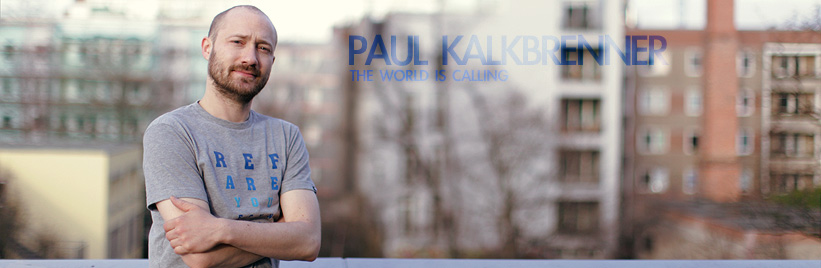
Paul Kalkbrenner: The world is calling

Fame, Franzen and Pfaff. Paul Kalkbrenner has plenty to say on each, as RA's Todd L. Burns found out late last year in discussion with the Berlin producer.

It took a long time to interview Paul Kalkbrenner. Which seems strange to us at RA, because he lives right across the street from our office in Berlin. I left for the interview five minutes before it was supposed to start, and ended up four minutes early. That's what happens when you're trying to schedule an interview with one of the most famous techno artists in Germany.

I first became aware of Kalkbrenner's enormous draw when I arrived in Berlin. A BPitch employee was trying to type a message on Twitter on her mobile phone, looking almost terrified that Kalkbrenner had become sick and wouldn't be able to play that night. "After the movie..." she said. It's no joke. Berlin Calling, years after its release, is still being played in a movie theater in the city. And the movie's soundtrack, and the hit song "Sky and Sand," have vaulted the producer to heights that he never dreamed.

Among other things, it's made him big enough to feel the need to leave his BPitch home to form his own label, the first release of which will be a DVD documentary of the live shows he performed in 2010 to enormous audiences throughout Europe. I caught up with Kalkbrenner late last year in advance of its release.


Where did you grow up, was it here in the Mitte neighborhood of Berlin?

I grew up in Berlin, in Lichtenberg. In the East. I was 13 at the time of the Reunification. But after the wall came down, it was still very Eastern there. There was a huge variety of people at the places where we played when I was young—even skinheads.

Where did you begin to play?

We started to play in youth clubs, where people from 13 to 17 could hang out during the week, playing pool. Pupils from four to five schools around the city would come. It would be open from 6 PM to midnight, but I would have to go home at 11. I was only 15, and my mom wanted me to be home at that time.

Were you playing records?

Yeah, with Sascha Funke. We played a lot of stuff from Benelux, but I also liked Underground Resistance, because their records were pressed on one-side only and the back was scratched with text and everything. We wanted to have the UR hoodies. I know a lot about records between 1992 and 1997, but after that not anymore.

You just stopped paying attention.

Exactly. Records led me to the techno scene, but it was never really my thing to play them.

What was the first machine that you got?

We borrowed things—like a sampler, a good one, a Roland sampler—and we sequenced it with a tracker program on an Amiga 500, and we liked that so much that I later ended up with an Amiga 4000 Turbo. We also had a good mixer with like programmatic EQs, so we were recording everything. Back then, when you missed something you had to go back. I did that for many years, until 2001, when I switched completely to Ableton Live. Now, when I play live, it's actually the same as I produce music. So everything is open, and I can arrange things in a new way.

Is there no desire to change? I mean, are you are still finding new things, or you are just very comfortable with your set-up?

Exactly. I found my set. It took me a few years, but that is the set-up.


"When all the people scream
because you are such a great guy,
then you're actually lost as an artist."


What is it about that set-up that is so comfortable for you?

It's because I can do the same with it as I did before, but I can tell them to give me the mixer and just go along with the computer and controller through the interfaces and all those cables and then I plug in and run with 16 ins and outs on that set there.

I like it because even if I play the same songs in the same order, it can not be the same. Nothing is recorded. It's all in the Session View, and I arrange it there on the stage.

Tell me how you first got started with your releases. When you first had a track ready did you send it someone? Did you give it to Sascha?

We lived together, so we already knew all of the stuff we were working on. We shared it together. We knew Ellen from the BPitch Control parties, which actually existed longer than the label, and she came by... It was actually a quick thing, she liked us, she said "You are recording? So buy that recorder and do some more." A month later she came by again and said, "Yeah, that's good stuff."

Did it feel like something special, or did it feel just like a natural progression?

I don't know. It felt really cool to release and have some bookings. I mean, I played some live shows before that. But we are in Berlin, and you need to release. It's still the same.

But you've gotten to a position where I think you don't need to release so much.

Now [laughs] at this time, this is a special situation. I do not know how often this can happen to an artist within this kind of music. It's very luxurious, because I do whatever I like…

Is that dangerous?

It is dangerous.

Did you ever think you would get to this position? It seems like you've been able to take your career into your own hands in the past year.

I only want to play my own good sets, that's the only way to make that happen.

Were you nervous when you left BPitch?

When I left the label it was very hopeful, it was exactly the right thing to do...

It seems like it was a great success.

It was, but it's different in the club scene. With the shows that I did in 2010, I actually produced it. I personally took care, saw plans, did all of these things and then I went and played the show. It's crazy.

There are a lot more things on your mind now. Before you just had to go to a club, plug in and play.

I actually like this kind of stress. It always felt good. I mean, for example, the Arena show in Berlin was three times larger than the other electronic shows. I hired a lot of people to work. I felt responsible.

Is the movie something nowadays that you distance yourself from?

Yeah, I mean there is no Berlin Calling tour. And with every booking my manager says very clearly that this is definitely not a party where anything is called Berlin Calling or they use the flyer. I think that is all we can do. There are so many things I cannot control anyway. It's like the quote: Underneath I wish to have the courage to change the things I can, but also to be patient enough to not try to intervene into the things I cannot change, and to be wise enough to distinguish the one from the other.

Are you working on a new album?

Not yet, I fly to South America tomorrow. So I hope I will have the time when I am back, but I definitely have to.

Why do you have to?

Because it's time to make one, after the movie together with an album and all this touring, now multiplied with this DVD it feels actually the right thing to play less and produce an album, no question about that.

Do you have a lot of ideas for what you want to do, or do you just go in and see what happens?

No, I think... not that I want to have it sound the same, but it should be something like Self.

Why that album?

Because it's the only real album I made. Because I can do whatever I like, because the majors just want to have me in their portfolio, they also want to have radio in their portfolio, even if they don't make money with that, because when the label managers go to their fancy afterparties, they do not just want to have Scooter in their portfolio. I also became something like this, so I actually can do whatever I like, I actually again want to make a retired, nice, listening techno album. On Self it went so good. It sounds like it was made in one session.

How long did that album take to make?

From the first idea? Let's see... nine months?

So you don't work very quickly.

I work very quickly I would say. I mean, I also like to enjoy my life, I always did. There aren't so many techno artists that are so seldom in the studio like I am.

Why do you think that is?

I became very efficient. I am very proud of the fact that I can bend the randomness of my studio. You know, when you were younger, you were chilling there for ten hours "Bum Bum Bum," and then "Yeah that's it, let's just take it," but nowadays I think of what I want to do, and I sit down and actually produce it.


"Berlin never is. Berlin is
always becoming something."


You said you enjoy your life instead of being in the studio all day. What are your hobbies these days?

I like to read about politics and history, actually European political history, that's my favorite thing.

What was the last book you read?

I'm reading Jonathan Franzen's Freedom. I also read his book The Corrections. I am just at the beginning, but maybe he is right, maybe he could write the contemporary American novel. I read that after The Corrections he was like desperate for nine years, like burning everything he wrote and then BUAFFF...this new book.

Do you see any potential parallels between yourself and Franzen? Do you think you could have writer's block like that?

No, no. That's typical for a writer. It's different for a piece of art like a painting or a sculpture. They are not so exact, they are varying, and you also have it in producing records. When you're playing live and the last tone is gone, just empty beer bottles remain. It's something completely different. There are less consequences, you play it and then it's gone, while letters, you know, are hammered in stone.

The records too, the records and the books, but even though it's music, it reaches the people in so many different ways, in more ways than something to watch would, because with the eyes it's more obvious and with words it's even more exact…especially with the internet. The internet will never forgive, it will never forget.


Paul Kalkbrenner - Berlin Calling


I was reading DJ Mag recently, and they asked all the DJs that made their top 100 list the question, "What are you known for?" You said that it was your golden shoes.

Yeah, somehow I like those shoes so I bought so many pairs of them so I can wear them all the time. And they're everywhere on the DVD, but don't quote me on something DJ Mag is writing. These three word questions. It has to be done, so the magazine isn't empty.

I guess I found it interesting because everyone else seemed to take these questions very seriously. And your answer wasn't. It seems like you're among a certain level of artist now. But you don't act like it.

I have an amused distance to all that shit, because it can't be true, you know. I make techno records, so people shouldn't act as if a celebrity is driving by. And they actually shouldn't care so much when a celebrity is driving by, because there is no reason for that. You become a big projection area for all different kinds of hopes and everything from young people. That's the price of it, they like you, they project, they love and whatever.

I think when all the people scream because you are such a great guy, then you're actually lost as an artist. That's it, bye bye when this happens. They can not mean me, because most or all of them actually do not know me. I am super exposed as you can see, but it also makes me wealthy and known. That's the price to win, and it's their right to make clips where people are dancing. They have the right to play around with that image of Paul Kalkbrenner.

So what is the image of Paul Kalkbrenner?

I don't know.

So what is it that you are projecting?

I don't project anything, I just know I am projected on. I don't think there is one. There are 1000 different ones, some like this, others like that, some completely misunderstand the movie and think it's advice. They think it's very cool to go to Berlin and take a lot of drugs, therefore they come to the concert and say that they liked it on drugs.

I don't have the power nor the time to judge what they think, what they see there. Mostly they just see my gold shoes and playing all the songs there on the stage. Even with this DVD, we had scenes we cut out. So even when they think they get so close, it's just how close we allow them to come. I could not even watch the DVD… When we had to edit the new beginning scene, I put the DVD in and saw a bald guy with a beard playing "Altes Kamuffel" and I stopped. I had a great team that helped with it. Max Penzel, the guy who runs all this on m-cadrage, he is always crazy, he sat too close to this material for too many months.

So he is the one who needs to go to a mental hospital, and you're the one who is totally fine.

No, he just needs a vacation. He was working unbelievably hard, and he did a good job.


"Nobody can tell me that they prefer
to sell 300 records instead of 3000."


You seem quite relaxed about all of this stuff.

I am. The thing with this underground thing... I mean, you do not want to be the commercial guy who is just rich, but nobody respects him anymore. But nobody can tell me that he prefers to sell just 300 records instead of 3000, because you want other people to listen to your music, if you would not, you would make it as a hobby. If you decided differently, then you cannot tell me that you prefer to sell less records than more. So people evolve in it.

You know I never sent someone my music and I never advertised myself to someone else. I always let the people come to me. And, you know, it's just working by itself, I do not need to stress. I can trust my people. My agent knows me. I think between agents and artists like 80 percent of the talks, emails and phone calls are, "Yes, I am off here, let's do it like this and that." I don't need to do this with mine, because he knows the plan, he knows exactly what to do. He knew after the big concert tour, the next weekends should be in clubs with 350 or 400 people. We say no to 98% of the offers, even though they are...

It's kind of like a dream almost, some of these offers that are coming in...

Yes. But it's good to feel that I built this myself. I come from East Germany, so when the Wall fell my family didn't have much. The main reason this is possible is the fall of the Wall. I'm thankful forever for that. It was the turning point in my life.

What was the first thing you did when the Wall came down?

My dad took me out and we went to McDonalds, we had some Deutsch Marks but maybe just one or two and a Big Mac was 3.50, so we just had a hamburger instead. I remember I took the paper in which the hamburger was wrapped home.

That's interesting. Obviously Berlin has changed a lot since the Wall fell.

Some people say that since 1999 that it has all looked like it is now. But that's not true. At this time, it changes more and more. Berlin never is. Berlin is always becoming something. This is how it is for many places, but Berlin very much.

Do you ever think about moving?

I lived in France for eight months in 2006. That was nice, but I am staying here.

Why did you move there?

Because the winter the year before that was unbearable. It was like minus 20 constantly for two months. So I went to live with Sascha there from October 2006 to May of 2007.

Do you still spend quite a lot of time with Sascha?

No, not so much anymore. But it's also because of this BPitch thing. I did not trust them to make it as big as I needed it, it will never be able to happen there.

You thought it will never be able to happen there?

No. It was also always in the label context there. No, I do my own thing. Maybe it's also like a relationship. I mean, it was ten years. It's not that I dislike them. When I see them, I say "Hi, what's up?" But the air is out. Sometimes everything is said, let's move on.


I know that you're a big football fan.

I have to say, I am a maniac. I took off for the World Cup. No shows. I bought all 32 flags, and they were always to the left and right of the screen during the matches, with the scoreboard and everything.

That's pretty serious. Did you have a bunch of people over for the games?

That's actually why I moved here. So I could watch it comfortably with 10 or 15 people. We were disappointed at how it turned out, but also proud, because the Germans always played successfully. That was their 12th semi-final. Without the Germans, it would have been kind of a boring World Cup.

You're a Bayern supporter, right? How did they come to be your team?

In East Germany, it wasn't the custom to let kids watch TV so much, because there were a lot of commercials running—things that could disturb young minds. So we watched Bundesliga, always in a friend's house or wherever. And in the mid-'80s, Bayern had Pfaff in the goal and Lothar Matthäus. You watch it once, and it never goes away.

Published / Friday, 21 January 2011

comment 41 Comments

Photo credits /
Live at Klinch @ Melkweg, Amsterdam- Martijn Savenije
Others - Paul Clement

Also available in / Japanese


Share this article


Features


Other features
The unassuming Leeds DJ/producer has little regard for tempo or genre. He just wants to please himself, as RA's Kristan J Caryl finds out.
Detroit's favorite Swede is back with a new label and a double disc reissue of his seminal debut album. RA's Todd L. Burns investigates.
Dance music is more popular than ever in the United States. But for organizers of large-scale festivals within the country, it's harder than ever to convince local governments that the events are anything more than lawless raves.


About  
Staff  
Mobile (beta)  
Submit event  
Copyright © 2013 Resident Advisor Ltd.
All rights reserved. Terms & Privacy.