RA
RA Japan
Global
Local
Music
Interact
Search RA
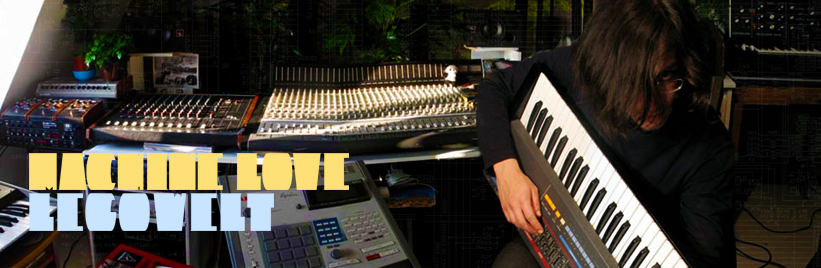
Machine love: Legowelt

RA's Ryan Keeling journeys to The Hague to meet one of electronic music's most fascinating and prolific figures.

A tram journey to Danny Wolfers' place and 60 seconds inside his home: that was all it took to make sense of the Legowelt story. At the time Wolfers was living by the sand dunes in the coastal Dutch city of The Hague (he's since moved within the city). I admittedly spent less than a day in town but that was more than enough to soak up the serenity and realise that The Hague is a place where people get shit done—there really is little else to do. Since his first experiments with synthesizers back in the mid-'90s Wolfers' work-rate has been spoken of in prodigal terms. His Legowelt project alone has birthed eight full-lengths of raw and visceral music rooted in house and electro. Somewhere in the region of 20 aliases have been assumed to present his often fleeting fascinations with a genre or a particular set-up, which, to name just two examples, have included African music as Nacho Patrol and Chicago house as Polarius.

Wolfers' mammoth discography can also be explained by his relationship to the music making process. During our interview it was at times difficult to draw him on the specifics of his approach, which was less to do with obtuseness and more down to the role it plays in his life. It's as though I was asking him to explain how he got out of bed or did his weekly shopping. Whatever the exact specifics when he's in the moment, Wolfers prefers to regularly vary the set-up and combinations of his vast array of outboard gear and, perhaps surprisingly to some, is by no means wedded to purely analogue technologies.


When were you first drawn to the possibilities of electronic music production?

It was in the early '90s when house came up and it was something special and magical. On MTV there would be documentaries or little items about these guys using a TB-303, saying [house music] could be made in a bedroom on a cassette tape and I thought, "That's cool, I want to do that too." I guess it was around '92 and of course I had the Commodore Amiga already by then. It played a big role in electronic music in the early '90s, a lot of people used it with the programme called OctaMED and there were other programmes too like Protracker or even like a Cubase-style programme.

There was an Amiga computer magazine at one point and they gave away a free copy of OctaMED...I think [the Amiga] has been very important in the history of early '90s electronic music. A lot of people were using Amiga for all kinds of music styles. Jungle music played an important role. Also, hardcore gabba music in Holland, which was one of the main machines, also techno like Unit Moebius from The Hague. They made their first tracks on an Amiga with OctaMED. Really a lot of artists... I think Aphex Twin used it.

So you already had an Amiga: had you been listening to much electronic music at that point?

Yeah, slowly, because it was like an exciting new thing in my early teen years so I thought, "OK, this is cool." Not rebellious, but something fresh. For a boy it was very exciting to hear music made with computers or electronics, you know. Back then people were saying, "computer bleeps is house music." That's how I actually started: slowly on the Commodore Amiga, not this one [points to an Amiga on desk] because this is a 1200 but it was a 500 with a copy of OctaMED. You could sample sounds and then play it. Basically the Amiga is also like a sampling sampler, so you could use it like a sampler and sequencer and make tracks from there.


Did you have fairly serious aspirations to make tracks from the beginning?

In the very beginning, of course one should always have aspirations. Then quickly it didn't amount to much, but I just kept on dabbling. I thought, "OK, I'm going to make a house record." It was quite difficult because [back] then there was no internet. You had no idea how to make [house music]. I also didn't know anybody who did it so I was all alone and into that. I would go to the library and get books about synthesisers but they were from the early '80s, saying you need to get a Jupiter 8 or something, but of course it's impossible to afford that if you're 13. So I just kept on dabbling and slowly I created some tracks.

When did you realise there were other people in The Hague doing a similar thing?

Well, there was a radio programme back then. National radio was still pretty good and they would broadcast weird stuff. There was a Friday evening show... I don't know what it's called anymore but it would play house and techno records and Ferenc [I-f] would also play there as well and then they had an item about Unit Moebius: I thought, "This is from the Hague, that's weird," because I thought [the music was only coming from] Detroit or Chicago or whatever. People were only into rock music here. So then I heard about that and that there was Bunker Records, then a few years later I got a release on that label.

Did you have teachers within the label?

Not so much technically, because at that time I was already quite advanced with the machines.


"You don't need 32 channels
to make a house record."


When did hardware synthesisers enter into your life?

It's difficult to say. I guess 1993 or even '92. I went to Rotterdam with my dad to buy a Yamaha DX-21 FM synthesiser, which is an advanced version of the DX-100—like a double DX-100. But I didn't have any clue what it was back then. I thought you could make acid sounds with it, but you can't really do that with a Yamaha FM synthesiser. It's also very difficult to programme so it's a really very horrible first thing to buy. But it was all I had. I was very disappointed when I bought it because it couldn't make any acid sounds like a Juno. Of course it had some house sounds like the organ and the solid bass, but then I taught myself how to programme it in the night when I came back from school. I would spend hours trying to figure out how to programme it.

Were you captivated by the possibilities of synthesisers very early on?

Yeah, yeah it was very exciting as something to do and I was very involved with it...well, I'm still very involved with it. It was a true passion, yes.


To bring things forward somewhat, what is a typical day like for you in the studio?

I probably would just make some coffee, eat some breakfast, then probably do some administrative stuff... I never really have musical ideas beforehand, but when I'm sitting behind the synthesiser, I open up a channel and then I can start. I never go into the studio and think, "This is an interesting idea," and write notes. I don't do that. It comes while I'm making it.

Has experimentation always been the basis of your approach?

When I was little I played piano and violin, but that's had no influence over this stuff because I have forgotten how to play. [These days] I start working on a track and then it just automatically comes. It's always different. I use different machines. I set up my stuff in different locations. I also use different mixers all the time. I guess for a techno or house track the beat is very important. I'd probably start with the bass and from there I just look for weird dreamy sounds or whatever, and then I just start making a track.

Have you always programmed your own patches?

I like to programme synthesisers to a certain extent but I'm absolutely not against presets because I use a lot of presets, like from the Korg M1 or the DX-100, there's a lot of my own sounds but sometimes I use some legendary house presets. You know these people that say, "urgh, he uses presets." If it's just a sound, who cares? It's what you play with it. The piano is also a preset.

You must be pretty good at spotting when other people are using presets by now?

Definitely from everything up until the year 2000. I don't know much about new synth workstations.

Is there much from the past ten years that interests you?

A lot: as you can see here I've got the microKorgs which I'm a huge fan of. They have a lot of synthesis capability and also the sound I kind of like—it's like woolly, in between an old Roland sound, like a Jupiter mixed with....they're like little work horses. If you have a computer editor you can do amazing stuff with it.


Do you have a preferred type of synthesis?

I'm definitely an expert on FM synthesis. I can programme the DX-100 and I've totally mastered it if I say so myself. Also the D-X7: I have one of those too but I like the four operator ones because they sound more characteristic than the D-X7.

Have you ever dabbled in modular synthesis?

Absolutely not. For me it's the most boring thing. I have the MS-20 analogue sequencer and the MS-10, but modular synths don't fit in my work flow. They're also really expensive. A guy would have a $5000 modular system and the only sound he makes with it is [makes raspberry noise] sound. Most of the time they're also not polyphonic. I think modular synths are more like a hobby for synthesiser dabblers, you know. I'd rather want to have a good workstation ROMpler, like the Korg Microstation here [points] because you can really use that to make tracks and you can make much more interesting sounds with it also I think. Of course you can buy amazing modules and make them sound really weird but it also doesn't work quickly enough for me because you have to patch the cables and there's no memory.

Are you still using the Amiga for sequencing?

I always have different ways of working. Maybe for one week I'll work only with the Amiga connected with an 808 through the MS-20 and then I'll do something else to keep it fresh, because I'm not somebody who can sit in the same studio all the time—then I get bored and there's no more inspiration.


Have you always paid close consideration to your environment?

Yeah, I guess so because at one time I had this huge studio with every fucking synth possible and a giant mixing board, like a Tascam, automated. It was a huge thing with lots of channels, a real pro thing. You're sitting there and you think, "I'm going to make house and techno music with this?" Most house and techno classics are made on this Tascam 4-track or even mixed with a DJ mixer or something.

I thought as an artist, you had to have the most equipment and the most expensive compressors...well, this is basically bullshit because you can use anything, even just a laptop or something to make a great record. So I gave my mixer to Brian (Orgue Electronique), I sold a lot of synthesisers because I wasn't really using them. Then I just started using this Inkel audio mixer which I got for €20. It's really simple, but it's all I need. You don't need 32 channels to make a house record; I was only using like three channels on this giant mixing board.

When did you make this realisation?

I don't know, I guess a few years ago. I still have my studio. In the synthesiser world, people want prestige, the more synthesisers you have, the more prestige you have, always. Especially on those forums, a very masculine, macho thing, the same with a car hobby or something. Especially with modular synthesisers, it bores the crap out of me.

Is this something you've been guilty of yourself?

Oh yes, certainly. I guess everybody has.

Do you regularly find yourself hitting limitations with these older technologies?

I'm combining them with a lot of new technologies actually. I've got very modern synthesisers here like the Microstation and I also use computers a lot and combine them. I use different software—I use Ableton, Reason, all kinds of stuff too.

I wasn't actually aware of that.

Yeah, people always think I'm an analogue old school cat but I like to combine stuff, I like changing my set-up all the time. I also use different programmes, one week I'll be using Ableton and then I use Reason for another week.

Is this more of a mental thing to keep yourself fresh or are you looking for a different type of result?

I think both. To keep it adventurous, you know.


Are there certain aesthetics you're drawn to in electronic music?

I like dirty sounds, that's why I record a lot of stuff on cassette tape, on a 4-track Tascam. I used to record on reel-to-reel tape but that's very expensive to buy now. A reel tape costs €30/€40. If you record high speed you can record three tracks on there. I make a lot of tracks every week, so I would have to spend like €300 on tape a week. I either record directly into the computer or on cassette tape. I also like using old dirty mixers, for example this little Behringer mixer here, it can sound really dirty too actually. That's also with this synthesiser elitism macho thing: they always piss on Behringer.

Behringer, it's the whipping boy isn't it?

This little mixer is really, really nice and it's got really good effects, but it's not cool to say that. It actually can sound really lo-fi. It's better than a lot of other mixers. Using certain filters I can feed stuff to the MS-20—lots of people do that I guess.

I've read that delay is very important to you.

Yeah, indeed. Delay is one of the fundamental things of my music. I'm not sure why, maybe I can devise a theory about that. It makes music more alive and even if you do it very subtly, you cannot even hear it, but then these musical dimensions get doubled or they expand into time with delay... but then we're getting into a mystical realm of music...


"Mastering is one of the most
overrated things I think."


What do you turn to for delay?

All kinds of stuff, but this old analogue Inkel has built-in delay, like an analogue delay. Most synths have delay now, and even the Behringer has a pretty good delay, but I also have lots of delay boxes.

It may have even been in the same interview but there was something you mentioned about a particular EQ setting that you find yourself going back to where the upper-mids were...

Mid sweep. I like to get a sharp sound but also kind of wooly. Actually I cannot do it right here because these mixers set up here don't have any mid sweep. I actually try to leave it because it can be too much sometimes.

Do you pay much attention to the engineering side of things? Do you ever master your own records?

Sometimes but I don't really...mastering is one of the most overrated things I think. I don't have an opinion about mastering... I'm mostly into the sound and the music itself. It's the mystical realm that I like.

Words / Ryan Keeling
Published / Friday, 22 June 2012

comment 47 Comments


Share this article


Features


Other features
RA's Andrew Ryce sits down with one of the genre's most exciting producers as he works on his debut album.
RA scores a rare interview with the label boss behind one of Japan's most respected imprints.
Last week, the Barcelona festival held its 19th edition. We interviewed some of the people that descended on the city to enjoy the sun, music and vibe to find out why they came.


About  
Staff  
Mobile (beta)  
Submit event  
Copyright © 2013 Resident Advisor Ltd.
All rights reserved. Terms & Privacy.