RA
RA Japan
Global
Local
Music
Interact
Search RA
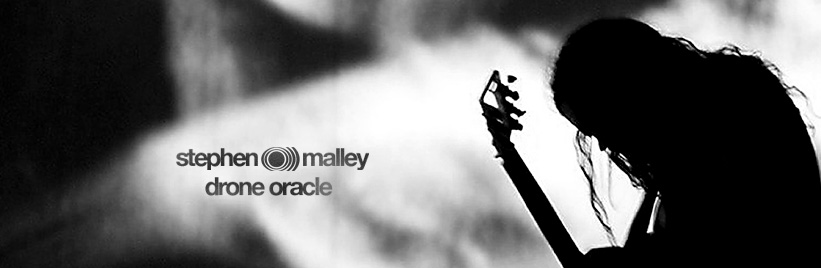
Stephen O'Malley: Drone oracle

The Sunn O))) member speaks about his new collaboration with Tim Hecker and spectralist music.

The walls are crumbling, if they haven't already fallen away completely. It seems like now, more than ever, disparate worlds are coming into contact with one another. Case in point: At this year's Mutek Festival drone metal merchant Stephen O'Malley will perform alongside ambient musician Tim Hecker. It's no secret that the two have plenty in common. As we learned earlier this year when we interviewed him, Tim Hecker is interested in the physicality of sound. So is the Paris-based O'Malley, whose work with Sunn O))) seems uniquely designed to provoke a reaction in your gut—and your head.

We caught up with O'Malley via phone to talk about his Ideologic Organ label, spectral music and France.


###


You were just in Sao Paulo with Editions Mego head Peter Rehberg to perform as KTL for Sonar. It must be interesting playing large-scale electronic music festivals like that.

Yeah, I mean we played in Sonar in Barcelona in the past with both Sunn O))) and KTL. This time it was KTL. I think it's interesting that the festival's open to it. They have more experimental bands on some of their programming, but when I was in Sao Paulo this time I made more of an effort to stay out until four or five in the morning to watch the DJs and kind of see what the scene was like. I had never seen Jeff Mills play. I saw Modeselektor, a group I had never known before, and liked them.

Were KTL playing on the main stage?

No, we were playing in a theatre stage at around 6 PM or something. If it was on the main stage it would have, frankly, freaked me out. Sunn O))) once played Primavera, and had a massive audience. It was pretty frightening actually. But pretty incredible as well. I think it was the biggest audience we've ever played to live. You look out and wonder, "Who are these people?" [laughs] "Where are they coming from?" Because we don't sell 6,000 albums in Spain. But it's amazing to have that experience. I think that live interaction is the important part about playing music really, and to have it on that scale is incredible.

You have obviously done a lot of stuff with Peter musically, but I'm interested in the label that you're working on with the help of his imprint, Editions Mego. How did Ideologic Organ come to be?

I wanted to do some vinyl, to start a small label, but I didn't want to get into the salesman part of it. Peter had started working with John from Emeralds on the Spectrum Spools label, about two years ago I guess? And we had a good discussion, and he was like, "Well, I have this great network set up right now, why don't you think about doing a curation type of situation with Mego taking care of the distribution?"

It's going pretty well. I like this sort of partnership thing too, because on one hand curating a label allows you to sort of form an identity, and to make connections between artists that may not have obvious links, but on the other hand the music business side of things is a pretty hard world to focus on for me right now. I'm so into doing my own music and doing concerts and...

Looking over the catalogue so far, who are some of the people that you feel really happy to have brought together into one place, to have drawn those connections?

Well, I would say Ákos Rózmann and Phurpa probably would not be presented in the same label. There's a link there in certain methodologies behind their concept. Phurpa's working with like an old form of Tibetan religious music. And Rózmann also has connections to Tibetan Buddhism as well. Musically, the sound is quite different of course. Phurpa is this total vocal group sound, like a doom group actually. Rózmann is more of a composition, collage, opera type of thing. I'm not saying that the label is focusing on religious music, but it's kind of interesting that two seemingly disparate-sounding artists have this thing in common.


Are you a spiritual person yourself?

I'm not a religious person, but I think music is something that can be a very spiritual or mythical practice if you want it to be. It doesn't have to be. I mean, it can be sacred to certain mindsets though. I had an experience trying to work with an orthodox choir, and we kind of stopped doing that because we realised that what's happening was a prayer actually. Although the music sounds incredible, and they are musicians, the main point of it is prayer. That's the thing about Phurpa. They've kind of taken it more to the music area, so you can approach this type of thing. Other releases of this type of music have been typically anthropological, so it's kind of a rare opportunity to be able to approach it in a more contemporary way I guess, without the religious weight behind it. Personally, I think one of Sunn O)))'s attributes is that it's suggestive of these things, but it's not necessarily confined by anything like that. It becomes subjective for the listener to go as far as they want to go with that interpretation or experience.

So it's purposefully vague.

Well, it's not purposeful, it's just natural. I mean, I don't come from a religious background. I think dogma is one of the biggest problems in our society so... I think the problem is that the church validates that, and this type of alternate way of thinking is actually very old and important to human beings, so having access to that is also important to making any music.

One of the things that you've mentioned with the releases on the label is that you were looking for artists that work in a "spectralist" style. Could you explain a bit about what that is?

Yes. Well, I think it's a term I'm overusing actually. I've used it in descriptions of three of the records and it really hasn't been appropriately used. I'm trying to use it as an adjective. More of a colour than a definite—or definitive—term. Technically "spectralism" is a term that grew up around several French and European composers in the '80s and '90s who were working with sound analysis in their composition. There's two French composers specifically—Gérard Grisey and Tristan Murail—who worked in this field. The term is also connected with a lot of people who have worked with the IRCAM in Paris, which is a research centre for acoustic studies and music and composition.

So when I talk about Phurpa having a spectral attitude, it's not exactly that. Phurpa's not a contemporary composer. Phurpa is a group of five guys from Moscow reinterpreting Tibetan Bon music. But aesthetically the sound of the music is close in several ways. They are doing the same sort of thing as these spectral composers who were having an orchestra play a piece and then shift into a sound that sounds like a modular synthesiser without having tape or electronics in the group. They were just using percussion, brass and things like this to reach into these other areas.

The last Sunn O))) studio album, Monoliths and Dimensions was really inspired by it, especially Grisey. Not in the exact structure of the composition, but in the phenomena of illusion through timbre, of instrumentation, this blur that happens, or that can happen. But I was hesitant to use the word at the time. And it doesn't go away, because we're a metal band essentially. It's kind of like I don't really have the credentials to say that but.... at the same time I guess my point is there are a lot of different ways to use that term.

I think making the term a little more flexible can only be a good thing.

Yeah, it gives people another point of language to refer to things. It allows me as well. This attitude, if it comes across could be valuable, in a way. And it helps when talking about Phurpa, for example, when talking about their music. Using the word gives more flexibility to what they're doing. [People see] them being these really stoic, grim characters. They're very precise with what they're doing. I've visited them in Moscow, and I've attended a rehearsal. It's very proper, it's a proper ensemble, so having a little more flexibility might help the listener be able to get inside the music, without being weighed down by this whole, "Oh, what is Bon? This imagery is too heavy or something?" It's a different way of approaching aesthetics I think.


You've obviously benefited in your own career from people coming at your work from different angles as well.

I've said that's the reason Sunn O))) has survived as long as it has. Because of this openness to collaboration, and really trying not to be restrained into one area. There's this core element that slowly evolves which is the way we work with the guitars, but... you know. There's so much area to work in, so why should you restrain it? I feel really lucky that people have been open-minded enough to kind of come to our "simple idea"—as we were described in The Wire recently. "Working with simple ideas." The people I've worked with come to it in an open-minded way, and they're willing to use this huge palette to open things up for themselves too.

Let's talk about your upcoming collaboration with Tim Hecker at Mutek. Have you worked with him much before?

No, no we haven't worked before. We know each other, and he's worked with some other people, like Isis, that I have contact with. We were at the same festival in Germany last year, spent some time together and talked about the possibility of going to the studio and just trying out the collaboration. And then we got the opportunity to extend that into a concert as well. I think it's a great opportunity to be able spend a week working on something, and then present the live form of that collaboration. We're playing in a church: Tim's going to be playing organ, and I'll be playing guitar.


So you guys haven't actually done the collaboration yet, you'll be doing it in Montreal the week before and then presenting it at the end? That seems nerve-wracking to me.

Why? It's not a deadline, so much as a continuation of a way of working. That's the way I look at it. Collaborations are... when they happen, it's not like a time that is issued by someone. It's a result of a communication with another artist, and that communication allowing you to come in sync for a period of time, to be in the same place, be writing together and trying out new ideas together.

You're living in Paris nowadays. How do you like it?

I like Europe. My music seems to have a lot of... well, there's a lot of potential over here for what I'm doing.

Would you say there's more potential in Europe than in United States for what you're doing these days?

I wouldn't say less or more, I think the environment for doing art and music is more healthy over here, it's not as... well, for my universe it seems there's more support for it. Being able to do projects like this Mutek thing with Tim is unusual actually for North America in my experience, the intensive collaboration performance pieces I've done in the past have mainly been in Europe. I love playing the States, and obviously I grew up in the States, had most of my music experience in the United States, but somehow I'm drawn to Europe, and I like being here. It's nice to be able to explore it in a deeper way by being here, you know?


Published / Monday, 28 May 2012

comment 2 Comments


Share this article


Features


Other features
RA goes in search of the ten best festivals taking place this July.
RA's Andrew Ryce profiles one of the hottest UK labels of the moment.
RA takes stock of the island's many offerings.


About  
Staff  
Mobile (beta)  
Submit event  
Copyright © 2013 Resident Advisor Ltd.
All rights reserved. Terms & Privacy.