RA
RA Japan
Global
Local
Music
Interact
Search RA
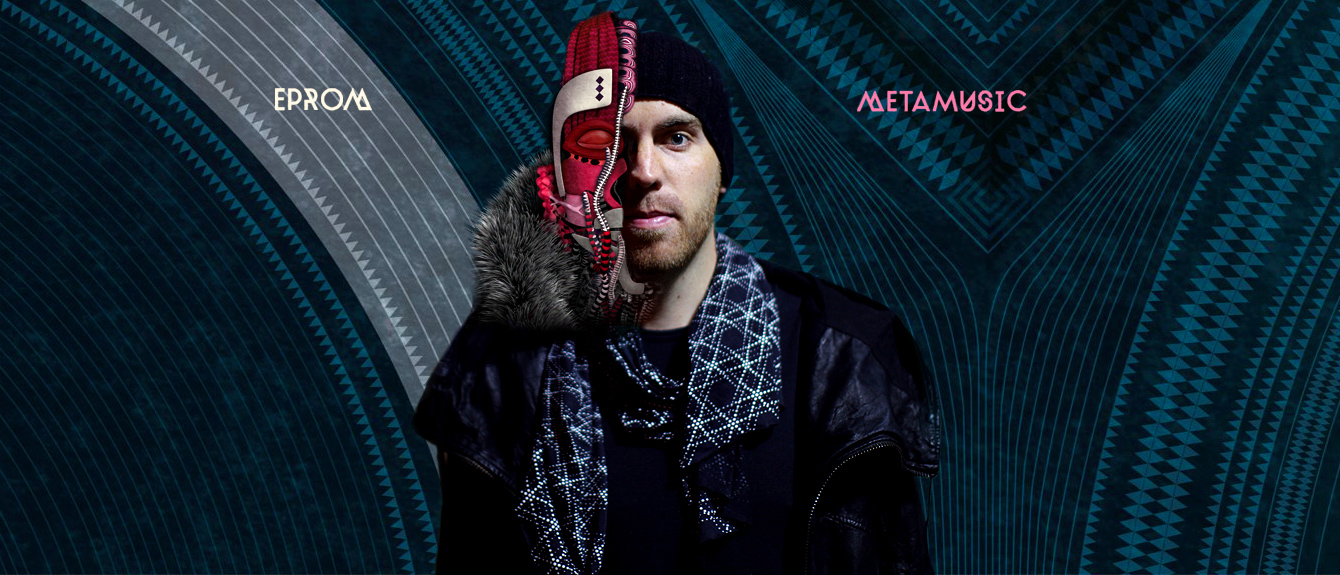
EPROM: Metamusic
EPROM: Metamusic

Unleaded physical power and giddy destruction: It's the best way to describe the sound of one of North America's rising stars. RA's Andrew Ryce explains.

Sander Dennis makes loud music. Unrepentantly blaring, aggressive, brutal, sometimes even macho music. That's not exactly a point of distinction in the exploding American electronic music scene. But EPROM's music is, perhaps paradoxically, also some of the most subtle and inventive of his West Coast peers, meshing the rude with the avant garde. He carefully manipulates each element to a degree usually reserved for the fussiest of minimal techno producers. An EPROM track roars, belches, squeals and shrieks, sounds contorted into frequencies stretched to their limits.

Unlike many of his US brethren, Dennis' music isn't exactly dubstep. In fact, it's more hip-hop than anything else. (He often loads his strange sludgy brew with dirty south rap percussion—snares that slide off the greasy surfaces.) But he doesn't quite fit in there either. His music is too willfully weird to fit a formula. Just take his idiosyncratic obsession with the aquatic, for example. Water bubbles prop up unstable melodies all over his debut album Metahuman. So maybe that's why he's become one of the biggest underground electronic producers in America: Like all of the best music, genres don't encapsulate what he's doing. It's better just to focus on what it feels like, namely unleaded physical power and giddy destruction.


The manipulation of sound was something that fascinated Sander Dennis from a young age. One of his earliest musical memories is slowing down and speeding up his Sesame Street toy turntable, revelling in the pitched-up, screwy sounds he could wring from it. "My parents had records from the Art of Noise and knew the producer from London. I heard all these records, and saw how they manipulated the vocals, and I wanted to recreate that." His first real love affair was with industrial music, which probably shouldn't come as a surprise given the full-bore sonic assault of so much of his work. "My cousin gave me a tape which I listened to until it broke and wouldn't play anymore. It had Nine Inch Nails on one side, and Primus on the other. It was sort of an act of defiance, being in the car with my parents listening to this incredibly gnarly music... [The] fucked-up synthesisers were really appealing to me," he explains.

"I saw the movie Hackers at the age of sixteen and it had this amazing techno soundtrack... a certain type of urban realness or sophistication which I was never a part of [growing up in Vermont], and I thought it was so fucking cool," he says, speaking of his later introduction to techno. "I didn't have that much experience with being in cities, and this sort of music was so exotic, futuristic and modern." After hearing Underworld and The Prodigy for the first time in the late '90s, Dennis began experimenting with making techno in Rebirth, "an early acid techno sequencer thing. I would record it onto tape and then scratch over it. That was the earliest music I ever made. I was always blending electronic music with hip-hop."

EPROM and Justin Beretta (Glitch Mob)
Dennis moved to the West Coast at the age of 18, where he met like-minded artists Justin Beretta (Glitch Mob), Nick Argon and Matty G. They started up two weekly drum & bass parties together in Santa Cruz called Colour and Flow: "those full moon parties are kind of legendary now... a muddy field and a soundsystem, and everyone freaking out on all manner of psychedelics." Drum & bass had a magnetic pull for Dennis, who was attracted to its rawness and its otherworldly quality. But after about five years he grew bored with the genre's formula-driven nature, and became much more interested in producers like DJ Shadow and Prefuse 73. "I started slowing down the tempos and including lots of intensely manipulated sounds. The scratch patterns they came up with have a great musical rhythm to them; that's what I try to imitate with my music, and then I come up with rhythms that have a human feel to them. I like that contrast between those, and the kind of alien nature of scratching."

As his musical ambitions became more serious, Dennis started to collaborate with Beretta, and their breakbeat-heavy numbers found a prominent supporter in West Coast bass music superstar Bassnectar. "I was making drum & bass that was more detailed [at this point], but since I was going to such trouble to make these subtle variations on a micro timescale I needed to slow down the BPMs, so that those variations had room to breathe." Then he heard dubstep. Specifically, the foundational Degenerate album by Vex'd in 2006. "When dubstep 'happened,' everyone was creating these super spacious beats, and [I liked it] because it gave me room to experiment with crazy sounds and have them take centre stage."

Dutch label Rwina got in touch via MySpace quickly after EPROM posted "Humanoid," his first track in the style. Like its title would suggest, "Humanoid" is a beast of a tune in somewhat recognizably human form—LFO wobbles tear through the midrange like runaway buzzsaws while a taunting vocal cycles in a frantic blur. "I wanted to make a caricature [of dubstep], taking it to its logical extreme. I didn't ever identify 100% with dubstep, but there will be a place in my heart for it always. It appeals to this memory of losing my shit to drum & bass when I was a kid, the age of all the kids who are into dubstep now."


The relationship with Rwina eventually culminated this past summer with the release of EPROM's debut album Metahuman. "People ask me what Metahuman means, and I describe it as one level removed from human—maybe a being that encompasses multiple humans, a future manifestation of what it means to be human when we've transcended our current concept of humanity." Haughty concepts, but the record almost manages to live up to that kind of talk with its sound design. Something about the way Metahuman's tracks weave and bob on invisible platforms of sub-bass and spit out crystalline melodies and gasping, disembodied voices feels genuinely forward-thinking. A track like "Regis Chillbin" is almost all inaudible bass, music that comes to roaring life on a good system, almost spiritual in its immensity (a new track of his, "Hurricane," with its time-stretched wallop, has a similar effect).

Metahuman marked a move away from the dubstep-inspired dynamics of his earlier work and into a realm that melted the genre's weight into hip-hop spasm. Most of the midrange is boiled away so all that's left is a vacuum, where the toppling snares cut through like knives. Those tracks' newfound sense of space means that pop-calibre melodies now have room to breathe. He attributes this to his girlfriend, whose love of poppier, R&B-sampling fare apparently rubbed off on him, as well as his friends in SF with whom he used to have a "song club," where they would gather weekly and comment on each other's new material. "That forced me to get faster [with producing], so now I can make a track in a day if I want to. Most of my good tracks are made in one day."

The thing that's most interesting about Metahuman, though, is its diversity. The dubstep crowd likes it because of its enormous weight and aggro tendencies, and the 'bass' crowd likes it because of its intricacy and subtlety. "Regis Chillbin" and its accompanying Machinedrum remix have also been staples in the sets of almost anyone who plays trap. EPROM is quick to distance himself from any particular trend, however. "I feel separate from [trap]... I released a track on Warp a few years ago, and the press release said it sounded like Mala with dirty south rap or something. I wasn't really rolling the hi-hats as much but it was the same idea. I've been doing it for a while, it's nothing new to me." That said, he's not against the movement either: "kids are being exposed to some really creative music right now... so if [my stuff] gets played in the clubs I'm delighted."

Clubs, specifically, are EPROM's main focus with his music. That, and those water sounds that appear throughout Metahuman. "I think [the preoccupation with water] comes from doing acid, probably, or other psychedelics. There's something about that sound... it grabs your attention when you're listening on the dance floor, and I guess for me it's [become] a signature. I've had producers hit me up and ask me if I sample the water sounds, but I usually just recreate them because when you sample them you get loads of noise." Amidst all this talk of strange production flourishes one gets the sense that Dennis is the kind of guy who'll try anything. In the wake of the resplendently diverse Metahuman, it seems like he's making good on that idea. He debuted an entire set of new techno material during Decibel festival, and reportedly it went down well. That Dennis would do a set of entirely new material in a genre that he has no association with at a major festival perfectly encapsulates his adventurous spirit. "I'll switch genres from song to song, or even within a song," he says humbly. It's that sort of restlessness that makes his work so fascinating.

Words / Andrew Ryce
Published / Friday, 09 November 2012

comment 5 Comments


Share this article


Features


Other features
RA travelled to this year's Ether festival in London to spend time with a group of artists—Mount Kimbie, Apparat, Bass Clef, the Brandt Brauer Frick Ensemble—who warp the perception of live dance music.
RA's Jordan Rothlein visits the Berlin-based duo, whose open-minded approach in the studio has resulted in one of the best albums of 2012.
In advance of his set at RA's night at <a href=/event.aspx?390063>The Warehouse Project</a> next month, we got inside the head of one of the most exciting techno producers in the world.
In advance of his set at RA's night at The Warehouse Project next month, we got inside the head of one of the most exciting techno producers in the world.


About  
Staff  
Mobile (beta)  
Submit event  
Copyright © 2013 Resident Advisor Ltd.
All rights reserved. Terms & Privacy.