RA
RA Japan
Global
Local
Music
Interact
Search RA
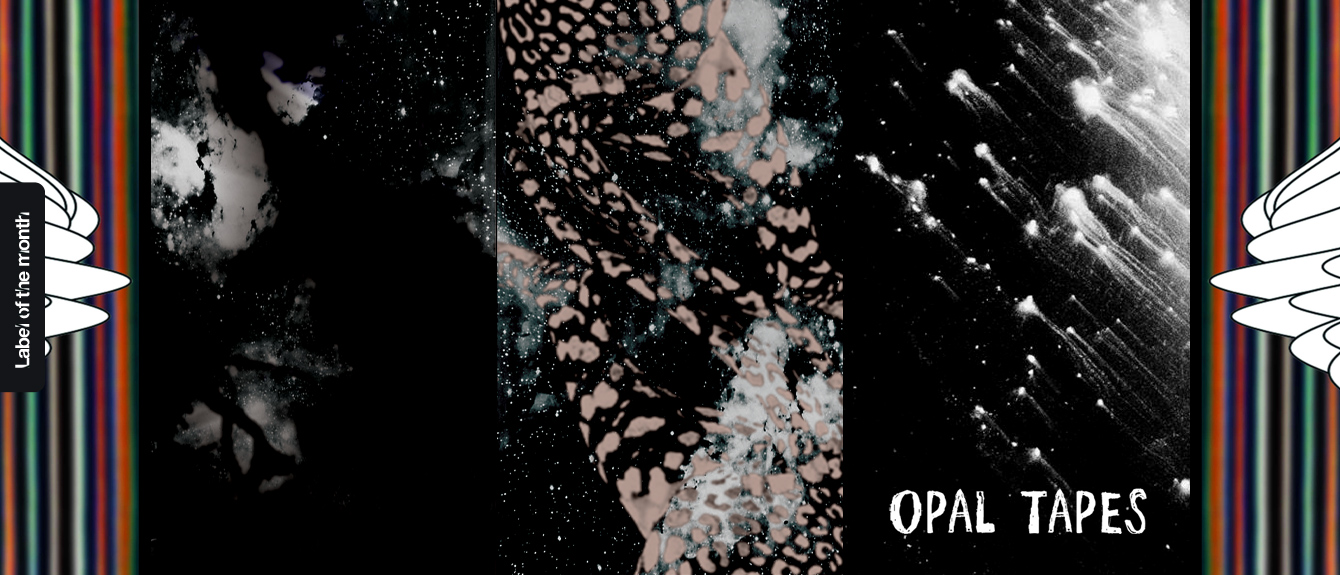
Label of the month: Opal Tapes

RA's Andrew Ryce meets Stephen Bishop, the man behind the homespun cassette label that's making waves in the electronic music underground.

I called up Stephen Bishop at his home in the small town of Redcar. It's close to Middlesbrough, part of the northeastern UK industrial centre Teesside. Redcar is the base from which Bishop runs one of the most finger-on-the-pulse labels to crop up over the past year. Opal Tapes effortlessly flirts with house, techno and some of the most cutting-edge experimental music around. This sort of genre-busting isn't exactly new, especially considering last year's domination by L.I.E.S. and PAN, but while those labels were establishing their greatness, another was growing in the fertile ground that lay underneath.

Bishop fell in love with cassettes when he was teenager. Growing up on a diet of punk and hardcore, the DIY aesthetic of it all very much appealed to him. But the cassette doesn't represent a defiant or subversive side of Bishop; in fact, for someone who runs a cassette label that does ultra-limited runs, it strikes me just how friendly and outgoing he is. He explains the DIY thing is just about having control over your own work, rather than some holier-than-thou attitude. "I was going to say, I'm not some 'fuck you Starbucks!' kind of dude... but I kind of am a bit of a 'fuck you Starbucks!' dude... but I'm not some total crust punk or whatever. I was faced with an England in which there was basically no jobs. So I made myself one."

The love for cassettes stretches beyond mere nostalgia: to Bishop, they're legitimate—if not ideal—sonic vessels for the music he loves. "I like the natural filtering of the tape," he explains, "I like how it kind of strips off a bit of the high-end and a bit of the sheen," an effect that adds a certain ghostly pallor to the imprint's releases. The world-weariness of the medium humanizes the distinctly artificial experiments pressed onto the magnetic film. But he also cherishes the visual aesthetic, the way the magnetic heads move with the music. The cassette "brings some sense of fragility to what otherwise is almost this ethereal, invisible gas that we put ourselves into and listen to."

The preoccupation machinery seems an unavoidable result of Bishop's surroundings. Redcar doesn't occupy the scenic, rural niche, nor is it dominated by the ghosts of heavy industry like Manchester—instead, it's sort of both. "I'm a ten-minute walk from the beach, and a ten-minute walk from a hill 500 feet above sea level with loads of woods and forest which continues for a few miles. I could walk in one direction and not go past another house for the best of 35 miles, [or] I could walk 15 minutes in the other direction [and end up] in one of the biggest petrol chemical plants in Europe."


That clash of machinery and nature helps to illuminate the curious appeal of Opal Tapes. There's no shortage of underground cassette labels releasing sonic doodles and concept-driven experiments, but the music on Opal feels distinctly tangible and accessible. It has roots in Bishop's old love affair with hardcore, but also in his deeply personal connection with drone music, which he fell in love with in his younger years because it reminded him of "those big cooling towers and the endless rumbling of the industry."

For something based out of a bedroom, his label started out auspiciously. Bishop's first releases came in the form of three tapes from already established artists: Australian beat shaman Dro Carey (as Tuff Sherm), American analog head Huerco S., and experimental underground all-star M Geddes Gengras (as Personable). These releases spanned guttural techno, broken house, enveloping synth wave and new agey drone, sometimes all on one side of a cassette, exploring any of the same ideas through vastly different palettes. It's a label full of contrasts, driven by Bishop's unique curatorial desire. "It was supposed to be about people coming from house and techno who were more interested in making textural music or non-rhythm based music... and people coming from 'outsider' music and making more rhythmic music. The Huerco S. tape is the absolute embodiment of what [I'm trying] to do with Opal Tapes... the perfect melting pot of sound, crumbling tropes of house music brushed out to oblivion. Beautiful, but also kind of sparse."


Later highlights include the dissipating dance floor work of Bishop's own music as Basic House, the austere lessons in brutalism from Portland's Best Available Technology, and the epic found-sound warbling of UK experimentalist Wanda Group. But if Huerco S.'s tape is the one that embodies Bishop's vision the best, it's the effort from Swedish producer Axel Backman under the name 1991 which pushes that vision outwards into something beautiful and panoramic. High-Tech Hi-Life is a collection of synth vignettes that bloom and recede in real-time, and Backman's ability to coax lifelike dynamics out of his machines is completely up Bishop's alley. It was so well-received that it was even pressed up to vinyl by Boomkat for a new series, and Bishop admits it was easily the best-selling tape.

But for every synth reverie á la High-Tech Hi-Life, there's something like Function Trax Vol. 2, a helping of frantic ghetto-house beats from Leeds' DJ Ford Foster. That might sound out of place, but while Opal Tapes isn't a dance music label, it isn't not a dance label either. Even the Foster material is tinged by distortion and aggression. This thread of dance-not-dance connects even the most disparate of Opal artists. "The stuff that is sort of dance floor-friendly ends up becoming more bedroom based, maybe because it's too wild, or too hot.... too raw. You'd have to EQ so much of the high-end out [in a club]." Bishop isn't much of a clubber himself, though that's probably due to his living in a town with "zero artistic culture" outside of stodgy museums and galleries. Nonetheless, he commends Ben UFO for playing Opal Tapes material in his sets, showing that he pays attention to the dance music world, even if he isn't an active participant.

Like many cassette labels, there's something almost charming about how small the Opal operation is. Each release is limited to 200 copies max, with some getting only 50, each completed by hand in Bishop's home before being sent out into the world. His choice of small runs has more to do with capacity than anything else, and it's not the cheapest job in the world: printing, supplies, postage and even gasoline—he has to drive a distance to a post office from his rural home—all factor in. The profit margins are thin, and he charges as low a price as he can, but he insists "I'm not doing this label to fail."

With a highly prolific and consistent opening year, 2013 is Bishop's oyster. The next few tapes, already up on the label's website, include the EBM doomsaying of Traag and the blackened synth pop of Ex-Con, further widening the Opal horizons. These tapes make violent dynamism their central concern, somewhat removed from the comforting drones that underlie Huerco S. or 1991. Other producers on board for this year include Dublin house producer Lumigraph, Vancouver hardware wizard Cloudface and American Uio Loi, who makes "glowing ambient... [with a] crunching jacking that goes through it." It's a truly international roster. "The person whose music I put out that lives nearest to me is about 60 miles away—DJ Ford Foster, who lives in Leeds."


If that weren't enough, Bishop has a brand new series of releases up his sleeve. A collaboration with friend Matthew Kent, AKA Mirror & Gate (the name means "reflection, and then progression"), will focus on split releases from two artists each: one with allegiances to techno with another who prefers drone and synth music, "just to show the bleed between the two styles." The first comes from Basic House along with Cleveland producer Prostitutes, and the next from Montreal's Hobo Cubes—"a total synth master"—and modular specialists Rolling Acres.

Then there's vinyl. High-Tech Hi-Life was pressed by Boomkat, but Opal Tapes just had its own first vinyl pressing with another project of Backman's, MCMXCI. Skogen, Flickan och Flaskan is straight-up techno compared to his 1991 work, so it makes sense to put it on vinyl—but it's also unforgivingly savage (and it was a tape first). New York's Anthony Naples also has a release coming, which Bishop hopes will end up as a 12-inch, as well as a forthcoming slab of vinyl from renowned ambient musician Yves De May. It might be called Opal Tapes, but what's in a name? "Vinyl's just the next thing, man. There's no big story." And while there may indeed not be any "big story" surrounding Bishop's humble endeavour, that only makes it all the more impressive.


###

Opal Tapes Mix
Stephen Bishop slips into his Basic House guise for 50 minutes of outsider electronics. Among selections from the Opal Tapes catalog, music comes from labels like Bunker, Mego and Prologue.

Download: RA Label of the Month 1301 Mix: Opal Tapes
(right click + save target as)
Filesize: 113 MB
Length: 00:49:28
Tracklist
01. Traag - Airbrushed Insides - Opal Tapes
02. Basic House - Dandellyon - Koppklys
03. 51717 - Essex Queen - Opal Tapes
04. Pita - More Break After The Terror - Mego
05. Kevin McPhee - CSA File
06. RA-X - Untitled - Bunker Records
07. Dariius - Black Car NYC - Salon
08. Unknown - Terris
09. Cassegrain - Eud - Prologue
10. OND TON - Spitfire - Opal Tapes
11. IVVVO - Rainy Rave - Opal Tapes
12. Work/Death - Simplified Methods For Imperfect Messages I - Three Songs Of Lenin
13. Ex-Con - Transferència / Reagrupament - Opal Tapes
14. Urea - Went
15. Basic House - Davids Skull - Opal Tapes
16. The Hers - Baby Came Out Like Good Gear In The Sun - Sex Lies Magnetic Tapespan>

Words / Andrew Ryce
Published / Tuesday, 29 January 2013

comment 21 Comments

Photo credits /
Redcar - Howard Russell

Also available in / Japanese


Share this article


Features


Other features
RA's rundown of the world's foremost festivals recommences for 2013.
Partying on a Mexican beach? RA's Grego O'Halloran reports back from what's rapidly becoming an essential stop on the global festival circuit.
A proto-synthesizer was developed in East Germany in the early 1960s that was far ahead of its time—but only a handful were ever produced. RA's Ryan Keeling meets some of the people who are intent on preserving its legacy.


About  
Staff  
Mobile (beta)  
Submit event  
Copyright © 2013 Resident Advisor Ltd.
All rights reserved. Terms & Privacy.