|
 |
 |
 |
 |
 |
 |
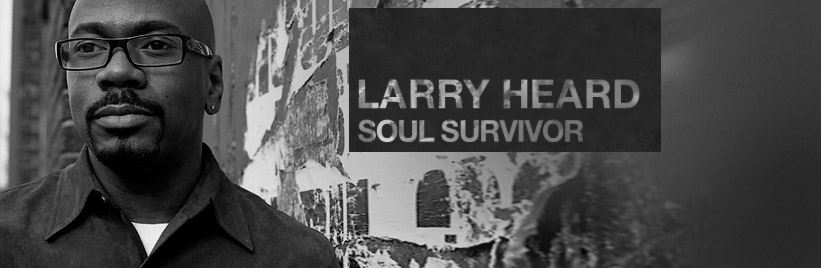
Larry Heard: Soul survivor
"House music icon?" chuckles Larry Heard. "All these kinds of titles end up being put on you, but they have never had anything to do with my original goal and intent." RA catches up with the gentle giant of deep house.
Early 2007. At almost every party you go to, DJs are playing the same tune. On some nights you’ll hear it three times in different rooms. Over the course of the year, the cut becomes a genuine club anthem, inspiring singalongs on the dancefloor and finding its way onto compilation after compilation that summer. A stripped down acid track with honey-smooth vocals, 'The Sun Can’t Compare' was the real deal: a fresh Chicago house track that somehow managed to sound both classic and contemporary. If it had been made by one of the legion of new deep revivalists, you’d have given them a round of applause for nailing the sound.
Of course it wasn’t. The track was by Heard himself, and just the latest 12-inch in a twenty-five year career of records which form one of the most intriguing back catalogues in dance music. For newcomers to the genre—and there were many in 2007—the soft spoken musician’s discography is a rich vein of music to dive into, from proto-acid tracks such as ‘Amnesia’ and ‘Mystery of Love’ that still cut like a knife to his truly sublime 1988 single ‘Can You Feel It?’ to more recent album-length jazz/downtempo/house explorations such as 'Where Life Begins' and 'Love's Arrival'. For longtime Heard aficionados—and there are many of those, too—the revival of interest, of course, wasn’t so surprising. Larry Heard hadn’t come back to the clubs; the clubs had came back to Larry Heard.
Originally a drummer in a Yes cover band, and famously devoted to building his tracks sample-free and from the ground up, Heard’s relationship with the ass-shaking side of house has always been a complicated one. His early classics, for example, were made even before he’d even stepped inside a nightclub. This arm’s length approach nowadays extends to his choice of city of residence, the decidedly un-4/4 town of Memphis, Tennessee, as well as his attitude to DJing, which despite his full schedule of bookings, is a role he’s always had a secondary interest in. Talking to Heard, it’s obvious that first and foremost he sees himself as a musician in the plucking, hitting and strumming sense of the word; he’s not comfortable settling for dance music’s usual methods and roles. It’s an attitude to music that in the end gave birth to the new kind of house he is responsible for: a dance music which deemphasised the relentlessly up-for-it tone of the genre and fused it with non-dance notions of maturity, real musicianship, stretched out improvisation and above all human feeling. In other words: deep house.
In an extended interview, Larry Heard speaks to RA about where he's at in 2008.
In your early Chicago days did you go out to clubs much? How involved were you in the club scene?
I was playing drums so I wasn't going to the kind of clubs you may be thinking about. I was in different kinds of bands—R&B, rock, reggae, what have you—so I was at soul clubs. That's why I missed a lot of the disco movement. There was disco on the radio, of course, so I was most familiar with whatever they were pushing on the radio. As for the more underground stuff, a lot of that went by me because I was at different kinds of clubs where there was music in the setting but the DJ wasn't really a big focal point. It was there, but live performance was more of the high point of the night or the attraction.
I was in bands from the time I started playing in '77 right up to when I left the last band in '84. Right after that I got a keyboard and a drum machine and made 'Mystery Love' and 'Washing Machine'. I'd been gradually getting into keyboards from being in the band so I'd started practicing. When I was in the band I'd often find myself going over to touch the keys on the keyboard so I could hear the sounds of these synthesizers, which were new at that time.
I left the last band because I wasn’t really getting any creative input. I was just playing the beat. I guess it was traditional for the other members of the band to not be very receptive to the drummer having ideas because everybody just assumed that the only thing the drummer was capable of doing was playing the beat. I wanted more involvement so I finally decided to leave and buy myself a keyboard and try to develop some of the ideas that were in my mind.
Did you play most of the instruments in your songs on your productions?
Yeah. Every once in a while I may have had someone come in and play the guitar part or the sax part but other than that I pretty much played everything.
Who were your big inspirations in the early days?
I was always into groups like stuff like Return to Forever, The Mahavishnu Orchestra, Happy the Man, Gentle Giant, Yes, nothing that anybody would guess. Maybe that's why I'm such an odd character to figure out because these are not stereotypical picks. You know, when people think of myself, Fingers Inc. and all that stuff, they think my whole world was just dance music, but that couldn't be further from the truth. It just ended up being the opportunity that opened up for me in the mid-eighties. And I just happened to have something that was compatible right then at the time. So it was a timing thing.
Fingers Inc. in London, 1989. Left to right: Larry Heard, Robert Owens & Ron Wilson. Speaking of Fingers Inc., are you and Robert Owens still making music together?
No, Robert lives in London. It's kind of hard to produce music together when you're in two separate cities and two separate countries. I've tried long distance productions with a couple of people but I just wasn't into it. When you're sending files back and forth, everybody ends up losing interest somewhere along the way. I prefer to work with the other person in the room and you can get it done in one shot. I come from being in bands so I like to be with other humans as opposed hanging out with my computer. The fun is limited because the computer can't react to ideas—all it can do is record and document the idea.
Tell us a little about your production process.
I've always been making up song ideas, melodic ideas, what have you. I have a very, very extensive archive that I can go to and review from time to time to see if there's something there that sparks an idea. It's always a kind of mixture of things. Sometimes I reach back into my archive and develop something, other ideas just spring from me being on the tools at that time.
There are a lot of vocals in your music. Do you write lyrics yourself or do you collaborate on ideas with vocalists?
The solo Larry Heard stuff is all me. I do the writing of the lyrics unless otherwise indicated (laughs), but most of the time it's me. Chad [Mr. White] wrote the lyrics for 'The Sun Can't Compare' but usually it's pretty much me doing everything from start to finish. That's another thing which is getting a little boring for me: having to do everything. I need to have the energy of other individuals involved so I'm trying to change that. Music is a social thing. It's hard to sit in a kind of confined situation and produce something that's going to have a social effect. It needs more ingredients. Sometimes things just flow out of you naturally but other times you need a little boost from someone else who you can bounce ideas off.
When you finished 'The Sun Can't Compare' did you have a good feeling about it?
In the first session we were just having fun. We were just seeing whether we were compatible working together so we just had fun. I'd present some tracks to him and say, "If any of these give you an idea just tell me to stop and we'll see what happens". So that's what we did. It was very a free flowing situation where he just kind of sang over the top of tracks. And when we had a good idea, we'd just record something rough so we could remember the thought process, then come back and fine tune it.
So can we expect some more Mr. White hook-ups with yourself?
I want to, but I can't say for sure. I'm still dealing with this whole issue of allocating time properly to get everything done.
Since you've been producing music for such a long time, you must have seen a lot of changes.
The whole musical world has changed. I was born in 1960, so between 1960 and 2008 yes, there have been changes. The biggest one is that musicians are being taken out of the equation. That's the biggest because it affects the music industry. How do you have a music industry without musicians? It's like having clothing companies without seamstresses. They go hand in hand. Musicians make the music.
Do you think the new technology is getting in the way of musicians getting involved?
No, I wouldn't say that. But in the past music was made 100% by musicians who had all fine-tuned and honed their craft. These days a person can get a program today and have a record out tomorrow, and there's only so much honing of a craft you can do overnight. The energy produced by a group of individuals who are playing and interacting off each other just can't be duplicated by a computer program, as great as they are. It just can't be done.
When people devote big parts of their life to learning different instruments, then something is transmitted in what they are playing that's not in a program. On computers it's just zeroes and ones so it comes off kind of cold, without the depth and without the intensity that you end up hearing from people actually having their hands on the tools on the instruments. So it's just something different. It may just be something I pick up on because I've lived in both worlds. But I do pick up on not feeling something because I like to feel in music when I'm buying it. Money should be well spent and I do invest in music.
So when you're in a studio, how do you record your music? If you're playing the piano or drumming live how do you try to catch that rawness?
I can't record the drumming live because I have to be on the computer. Once again it's another instance where other people are needed. There are some things you just can't do. A lot of times I also want to play bass on some of the selections but there's nobody there to push the record button.
You can't get a friend in?
It's not that you can't get them to do it, it's that you can't get them to be serious (laughs) because they're not particularly interested in anything that happens before there's a record. They're the type of people who go to the store and they buy a CD or a record or they go to iTunes and buy a download. That's the extent of the participation they want. They're not really interested in becoming an engineer or anything. So I usually just end up playing the bassline on the keyboard or something that's just easier to manage. Bass requires two hands but humans only have two hands. I don't have a third or fourth hand for the music and the computer keyboard.
Now with digital, like with the iPhone and such, you can buy music on the move. And people are saying how the music is presented is affecting the quality…
Well, for me it's more about what's presented. I know the Internet is there, but I've been really detaching myself from that, too. You can spend your whole life sitting in a chair on the Internet and that's not what I want to do. I want to live life, not just feed on a monitor. It's weird. It's there but it can't travel. It doesn't travel with us like our little AM transistor radios did back when I was younger.
You could just take your radio and hear songs while you were out playing. I think it's getting closer to that as far as the mobility of the devices, but now the next thing is even if you do have a mobile device, how do you decide from the billions and billions of DJs out there? Which one do you tune into? You can only tune into one at a time if you're going to listen carefully. That's where we need a little more information as far as trustworthy resources go. Instead we're getting this whole plethora of stuff that you just can't manage it.
"When people think of myself, Fingers Inc. and all that stuff, they think my whole world was just dance music, but that couldn't be further from the truth."
Why do you think it is?
I don't know. I'm not in the information flow business (laughs). The virtual world kind of came upon us really quick. It was a little office thing and then it jumped to the general public very quick so there's no real organisation. Now we're trying to go back and organise it. But even so, you'd still think certain individuals would rise above, but I don't know why that's not happening. Where are the standout individual DJs? You hear all these names lined up, but you don't hear about individuals that are head and shoulders above as far as the calibre of the selections they're playing. The way these people are received, most of the time it's just more hype-driven. You hear names.
Like for me, Christine Aguilera was a name I kept hearing before I ever heard a song by her. And the principles in place in the mainstream music industry, they carry over to the independent side. So much is hyped. If you hear the name too far ahead of hearing the actual creative work, that always makes me suspicious. (laughs) There's too much emphasis. The name would just come to me organically if it were great. If it just caught my attention and I had to ask someone, and they told me it was Christine Aguilera then it would be different because I would have discovered it on my own as opposed to somebody just pushing and saying listen, listen, listen. Because sometimes you do listen but you feel you're listening out of obligation rather than enjoying it. You can feel bad. It's like when you get promos from distributors or promotion companies, there's so much pressure to get them your feedback. It sucks the enjoyment right out of it.
You've DJed all over the world. Have you had any particular unusual experiences?
I think I've just had the usual DJ experiences. (laughs)
Somewhere like Japan must be quite different to Europe.
Japan is the freest of all of the places I've ever played. Japan is the one place where you can feel comfortable doing whatever you want to do. Everywhere else you always feel obligated to live up to their expectations, to take them on a trip back down memory lane and play the old standards, get 'Can You Feel It?' out. You always feel obligated because expectations are so high. Those audiences are not into music per se, they're into specific styles of music. That puts a different tone on it. If I play a reggae record in Paris, you'll probably hear about it (laughs) because their opinion is already formed. They're so knowledgeable that you can't do anything outside of the box that they've put you in.
Do you think the Internet makes people more knowledgeable to the point where...
It makes them think they're knowledgeable, but there's a lot of information that's just not accurate. Just because it's out there it doesn't mean it's accurate. For instance, there are all kinds of people commenting on the Paradise Garage who never went there. They're all kinds of people commenting on Chicago who weren't in Chicago during that time period. It's all kinds of stuff. It's just a travesty of jumbled, garbled-up information.
Just going back to what you were saying about expectations in Europe, do you carry your classics with you? Or have you thought about not carrying them so you can't physically play them?
I always have a handful with me because you always run into those situations. You know, I didn't see anybody telling Ron Hardy or Frankie Knuckles what to play but that's what you encounter a lot in this new scene. People try to tell you what to do. Sometimes they're also too close for me. For example, I don't like being right in the midst of the dancefloor. It's a new school thing where the DJ wants to be seen under bright lights but that's not comfortable for me.
It's different from the Paradise Garage, the Warehouse, the Music Box and all the things that people talk about. In those places, the DJ booth was like a second floor window. They had their own area where they could focus on what they were doing. They could see the crowd but they weren't right in the midst of it. It's too much of a distraction for me for people to be so close that they can turn knobs on the mixer and things like that. I don't like that. I've actually had to stop performances because people were just too close and I couldn't get comfortable and relax.
You mentioned that in Japan you can relax. Is there anywhere else that you feel like you can just let go and just play whatever you want to play?
Here at my house.
Oh, that's not fair.
Otherwise it just ends up being about expectations, like before you asked me what I was going to play. The last thing I've thought about is what I'm going to play next week. That's a bridge I'll cross next week when I come to it.
But those classics will be in your crate?
Well, they'll be in my CD folder. We don't do the crate anymore, you know. I'm forty-seven years old and I had a back injury. No, we can't do that. That's just not happening. (laughs)
So you just play CDs? What do you feel about the quality of CDs as opposed to vinyl?
I'm personally more concerned about the content than the medium (laughs). If the content is no good, it doesn't matter if it's on miracle disc, I still won't like it. For me, having options is a good thing. For someone like me, an older individual who's not twenty-years old. I can't be carrying this big old heavy bulky crate which the airlines just lose anyway. Or when you get it back, it's empty.
Has that happened to you?
No, it’s happened to friends. I've been fortunate. It's definitely made me think about taking precautions. The stuff that I never want to lose is never going to go in the crate with me. It can only be disposable stuff or stuff that I already made myself an MP3 of or something. As back-up.
Mr. Fingers on spinning records: “I'm not an individual like Frankie Knuckles or Ron Hardy whose dream was to DJ. I'm coming at it from a different angle.” Photo credit: Celine Lazorthes Are you still finding new things and new ideas when you DJ?
Not really, because all I'm trying to do is get through the set. (laughs) I have the skill set to DJ, but once again I'm not an individual like Frankie Knuckles or Ron Hardy whose dream was to DJ. I'm coming at it from a different angle—migrating from playing drums and bass into the keyboards, and then transitioning into the outside world assumption that everybody associated with house is and wants to be a DJ. That DJ title was put on me.
Since I'm a drummer I have a very accurate concept of how two drummers work together, which is basically what you're doing with the records, lining the drum beats up. The rest is an assumption, like when people put down "DJ Larry Heard". (laughs) They put “DJ” first. You never hear “musician” mentioned at all. Just "DJ/producer", "producer/DJ" or "house music icon". (laughs) All these kinds of titles end up being put on you, but they never have anything to do with my original goal and intent.
Have you reached your goals that you wanted to accomplish personally?
No. The goals and intent that I have as far as being a musician, that's a lifelong intent. Guys like Roy Ayers, Gene Dunlap or Quincy Jones…I mean it's not like one day you decide you're not a musician anymore. That's one of those things that's part of your make-up.
I just mean taking everything into consideration, the early days, your instruments, performing and travelling, do you still get a good feeling from music?
I do, but I guess I also long for something else, you know? The things that we've experienced in the movements of the past we haven't had anything like that. The last big actual movement was to house/techno...
Do you listen to techno?
[Surprised] Well, sometimes those tags are a little inaccurate. Someone else says it's techno but I don't know if it's techno or what have you. All I know is if I like it or I don't. That’s with any kind of music, classical, country… It really has to be presented to me in some kind of form. But if I hear something and it's good and it happens to be techno, fine. I'm not biased against any styles. That's what I want. I want more music than I like. It doesn't matter what style it is.
Some things I get for more my own personal listening at home, like my jazz stuff and my reggae stuff. It always ends up being old stuff because some of the new stuff sounds so generic. It’s got more of an element of sincerity to it, and more of a feeling of passion, wild passion, behind it.
You don’t find that in a lot of recent music...
Yeah, you don't hear that in a lot of stuff. It just sounds like, you know, here I am, another person with a program, love me, compare me to Beethoven! (laughs) You can hear and feel that there is very little foundation or knowledge. There is a lot of this stuff. A lot of stuff I was getting, I had to tell different labels to please take me off their mailing list because the stuff you're sending, I hear sounds and I hear beats but I don't know if I hear music. I really don't. Just because you put sound on top of a beat does not necessarily mean you're making music. You're just putting sound on top of a beat.
Do you think a lot of modern music is lacking emotion?
Yeah. We're talking from top to bottom. We're talking about the whole entity of music. On the commercial side I'm sure it's just what's best for the stockholders and keeping the company afloat and what have you. The same principle applies on the independent side where it's like whatever seems to be getting a rise out of people, getting a response and a few sales, we duplicate that same thing until it's just drained dry.
At the moment in America, with a lot of hip-hop stuff especially, we've heard the same speeches, we've seen a million and one guys march across the stage saying the same words with the same premise. How long do you expect us to keep spending our money on the same thing over and over? That's why guys like 50 Cent come out with an album and…nothing. It's like they're in a rut. People are just bored with it.
A bluffer’s guide to Larry Heard
by Jorge Hernandez
1. Fingers Inc. – Can You Feel It? (Instrumental) [Jack Trax, 1988]
The classic Heard track. Robert Owens’ vocal version, Chuck Roberts ‘Jack’ version, and the MLK version are not to be passed up either, but you can’t beat the instrumental for pure, weightless groove.
2. Larry Heard presents Mr. White - The Sun Can't Compare [Alleviated, 2006]
A stunning return to clubland for LH, featuring a very pure, soulful vocal from Mr. White. Acid never tasted so sweet.
3. Fingers Inc. – Never No More Lonely [Jack Trax, 1989]
Props to Prosumer for reminding me of this 1989 android serenade, wherein Larry pushes his lo-fi gear, drum machines and Rob Owen's lovelorn vocals to fresh, romantic heights.
4. Mr. Fingers – Amnesia [Jack Trax, 1988]
The title track from the unauthorized Jack Trax comp is six minutes of proto-acid from 1984 that still sounds fresh in 2008.
5. Larry Heard - Love's Arrival (dub) [Alleviated, 2001]
This is the title track from Heard’s overlooked 2001 album—ambient, jazzy tropicalia on which he gently tickles the keys over an expansive, slow Balearic beat.
6. The It – Donnie (Ron Hardy mix) [D.J. International, 1983]
In the heart of every classic deep house jam beats a wee purple paisley heart. Here a dissonant male falsetto gets slapped around by a clap machine and pummeled by drum rolls.
7. Club Ice – Manhassett (Space Remix) [Black Market International, 1992]
This is a Larry remix with a buttery baritone hook enticing "Oh baby/don't you wanna go" over a snappy rubbery groove. Irresistible.
8. Larry Heard - Déjà Vu [Alleviated, 2001]
Another guilty pleasure from Love's Arrival—this time a sassy gypsy aria awash in silky male vocals, touched with bells and rattles.
9. Mr. Fingers – The Juice [Jack Trax, 1988]
Bonkers stop/start house track made in 1984 before Larry even owned a 303. Investigate for a taste of Heard's 70's prog roots.
10. Robert Owens - Bring Down The Walls [Trax, 1986]
Before he was everybody's "friend", Robert Owens was stripping the breaks clean with Mr. Fingers. This track is single-minded, strutting, tribal, acid house. Would you say house and techno is stuck in a rut or do you feel there's a lot of new and interesting things happening?
I am not able to fully keep up with what's going on because there's a whole lot coming very fast. And who has time to listen to all those records? I don't. I can't even get in the studio to record my own album project, so what makes anyone think I have time to listen to 5,000 records coming out every week? It's not happening.
Are you planning on blocking time off to get in the studio?
Yeah, I have to. It's mandatory. If there's going to be an album it will have to happen. There's no way around it. We're going to map something out. Maybe, say, after April or May or something I'll have to say, okay, no more DJ gigs. Period.
Period? Or maybe just for the rest of the summer?
Well, maybe. If not, it takes me away from my actual direction. Once again, it’s a related direction, but not exactly where I was trying to go. My direction is the studio. That's where I'm trying to go.
So DJing is perhaps a scenic detour for now
Yeah, it's somewhat of a compromise because it's the way that people want to see you. And that's a good thing. So, of course it's a compromise because we can't do the kind of concert we want to do. The next best thing to showing my face will be to come and do the DJ appearance.
What kind of concert would you like to do?
You remember Kool and The Gang? That kind of set-up. That's what I call a live concert. Anything other than that is a fraction…partially live (laughs). I mean, it’s only so much of a thrill because you're up there by yourself with a CD playing. How excited do you want a person to be? (laughs) You're standing on the stage with everyone's eyes on them ready to pounce on you with criticism. So there are all kinds of little darts and arrows in there. It's not like a walk through the sunny park when you go do any new thing. People are poised to criticise you at every turn.
There have been some projects and collaborations that were turned down because of that too. I've said no, I'm not going to do it because the whole dance community who say they’re behind you will be the exact ones that have all the criticism in the world about it. So it's safer to not do it.
Do you have any resolutions or things you’d like to explore or learn in 2008?
I'm sure there are things I want to learn, but I can't say I have a list in my mind. As you go through life, you always aspire to get to something that you haven't gotten to before. I think that's an ongoing thing whether you make a conscious resolution or not. Nobody wants to be in a rut so you do want and need something to come along and be exciting and reinvigorating and energize you that much more to keep you going for more years. That's what happens.
When you finally get bored and in a rut that's when people change occupations. When you're just tired and think this isn't going anywhere. Then if it's not going anywhere, let me go somewhere. And that's what I did with the bands that I was in. I said thank you but let me explore what I want to explore and I'll just go my own separate way and they can find another drummer that can just sit back there and be content.
Are you content now with life and music?
I'm content with life, but I can't say music because it's got some issues that need to be overcome (laughs).
Are we overcoming them now?
I don't think anyone in music is content. I don't think Sony is content right now. I think anybody's who's got good sense and has got eyes to see, if they are content, something is wrong with them. Some things need to be taken care of and put in place, especially the concept of people holding some kind of value to music. You say you like it, but it's not even worth the 99 cents or the $1.49 to buy it? That's a contradiction. I never had a problem paying for the music I liked.
I saved my lunch money when I was a little kid to buy a Sly and The Family Stone 45. I spent more than 99 cents on records before I was eleven years old so it's lame of people to say they like music and then, in the same breath, say that it has no value. That means you don't like music; you like getting stuff free. If you had to pay for it you wouldn't make the sacrifice. You like it enough to get it on the download but you don't like it enough to pay for it. You're in a different category from me because I feel it does have a value. And the person and label and individuals involved that put some effort into it, they want and need to try to make something back to continue on.
So those people who think they're helping the scene, they're actually helping to destroy it one lost sale at a time. Because that's what both the independent and mainstream industries survive off: sales. They don’t exist on good feelings or anything else like "I like the song but I didn't buy it". So I'm just like everyone else. I'm just hoping for the best and trying to put my best foot forward with the things I'm able to get around to doing this year. That's all I really can do because I can't really control the world. And I don't think that I would want to.
That would be a big job.
Yeah. (laughs)
| | | | | |
Published / Thu, 31 Jan 2008
20 Comments
| | |
|
|
 |
 |

Features
|
|
|